Showing posts with label WSET exam questions. Show all posts

Monday, January 10, 2011

The WSET / ISG Challenge Number Nine: Fall in Love with Burgundy

Burgundy has a long and venerable history. In fact, according to Jancis Robinson’s Oxford Companion to Wine, “when the Romans conquered Gaul in 51 BC, they probably found the
Celts in habiting what is now Burgundy already growing wine, although the earliest literary evidence dates from 312 AD.”

Here are two test questions to challenge your knowledge of this perennial favourite.

Which village is in the Côte de Beaune?

1. Pommard

2. Gevrey Chambertin

3. Vosne Romanee

4. Vougeot

Which Burgundy appellation produces the most wine?

1. Beaujolais

2. Chablis

3. Macon Villages

4. Musigny

FYI: These are actual practice questions from Frank’s WSET and ISG studies. Let us know how you’re enjoying them and using them.

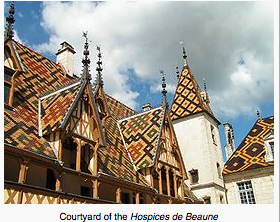
Both images shown are originally published on Wikipedia.

Tuesday, January 04, 2011

The WSET / ISG Challenge Number Eight: Where in the World is That?

It’s attempting to snow here in Vancouver. But thinking about the Loire is a great way to warm up, and the Loire is what this week’s quiz was all about. Plus, here's a piece of trivia for you.

The Loire also is reputed to have more chateaux than any other single region in the world - which is why both images in this post feature one. Now here goes for the answers.

Menetou Salon is located in:

  1. Nanatais
  2. Anjou Saumar
  3. Touraine
  4. Central Vineyards

Answer: 4.

Located in the Loire’s Central Vineyards, Menetou-Salon is located near Bourges and just west of the more famous Sancerre. Jancis Robinson describes the range of wines from this region as similar to Sancerre and often offering better value.

Bonnezeaux is made from:

1. Chenin Blanc

2. Sauvignon Blanc

3. Chardonnay

4. Merlot

Answer: 1

Chenin Blanc is the only authorized variety in the Bonnezeaux appellation. For a truly enthusiastic description, check out the Wines of France website that says “although it has only 90 hectares of vineyards, Bonnezeaux is nevertheless the shining star of the Loire’s Chenin Blanc producers. Bonnezeaux wines develop intense aromas of flowers, white fruit and tropical fruit which evolve over time to notes of precious woods, fruit preserves and honey that are balanced by Chenin Blanc’s elegant liveliness.”

FYI: These are actual practice questions from Frank’s WSET and ISG studies. Let us know how you’re enjoying them and using them.

Sunday, December 05, 2010

The WSET / ISG Challenge: Stalled by Java


We’ve had a bit of a glitch for this week’s WSET / ISG challenge. More accurately, Frank’s computer is having a glitch. And the name of that glitch is Caffeine. Now while I drink my java pure and unadulterated (can’t you just see the halo?), Frank adds it all — cream and sugar… that would be lots and lots of sugar.
So, you guessed it, the entire contents of an entire, sugar-laden grande from his favourite coffee bistro are currently sloshing around inside his laptop. So the next round of practice questions are under wraps until the computer techie can de-glue.
In the meantime, here are a few cool coffee factoids just for fun.
Winning the prize for funky, innovative marketing is Sheridan’s, a coffee liqueur first introduced in 1994 by Thomas Sheridan & Sons — the same company that brought

Bailey’s to centre stage. The two-stage bottle is fill with a black coffee/whiskey liqueur on one side and a white milk chocolate liqueur on the other. Carefully poured, the white chocolate floats gentle to the surface creating a drink with visual panache and great taste.

The classic Black Russian cocktail (two parts vodka, one part coffee liqueur is said to have made its debut in 1949 at the Hotel Metropole in Brussels. According to legend, Gustave Tops created it at in honor of Perle Mesta, who was at the time US ambassador to Luxembourg.

According to the International Coffee Organization, in 1720 a French naval officer named Gabriel Mathieu de Clieu acquired a coffee tree while on leave in Paris from his post in Martinique.

Intending to take the plant home, he secured it in a glass case on deck to keep it warm and prevent damage from salt water. Somehow, the plant survived an invasion of Tunisian pirates, a violent storm during which it had to be tied to the deck, potential death from a jealous fellow officer, and even water rationing that occurred when the ship was becalmed and De Clieu sacrificed most of his own water ratios to keep it alive. Finally, the ship arrived in Martinique and the coffee tree was re-planted at Preebear where it grew and multiplied. The first harvest came in 1726, and by 1777 there were an estimated 19 million coffee trees on Martinique.

Copa de Oro is a great substitute for the more expensive Kahlua.
The Craft of the Cocktail: Everything You Need to Know to Be a Master Bartender, with 500 RecipesUncommon Grounds: The History of Coffee and How It Transformed Our WorldThe Devil's Cup: A History of the World According to CoffeeThe Book of Coffee (Book Of...)The Savoy Cocktail Book

Sunday, November 07, 2010

The WSET / ISG Challenge: Number 2

“Writing a book on Bordeaux is rather like the proverbial painting of the Forth Bridge; it is always a Work in Progress,” says David Peppercorn, British Master of Wine, in the preface to his massive book on this famous French wine region, and titled simply Bordeaux.

See how you do on today’s sample questions on one of France’s most well known regions.

Which of the red Bordeaux grape varieties represents the largest percentage of grapes grown in the region?

  1. Merlot
  2. Cabernet Franc
  3. Cabernet Sauvignon
  4. Malbec

How many red AOCs are there in the Medoc region of Bordeaux?

  1. Seven
  2. Eight
  3. Nine
  4. Twelve

Check out the answers in tomorrow’s post.


Sunday, October 31, 2010

The WSET / ISG Challenge

Introducing something new at Blanc-de-Noir. In response to overwhelming demand by sommeliers in training, Frank’s compiled an extensive list of practice test questions, and he’s going to share them.

Now whether you’re studying for you Wine and Spirit Education Trust (WSET) rating, or you’re an International Sommelier Guild (ISG) student, or you simply can’t resist a good

challenge, we figure you’re going to love testing your wits and wine savvy against Frank’s sometimes easy, sometimes downright devious questions.

So here’s the scoop. Every Monday, we’ll post two practice questions – one easy, the other not so easy. These are the type of multiple choice you can expect when you write the exams, meaning you’ll get 24 hours to think, ponder, and decide. Tuesdays, we’ll post the answers. Coming soon, we’ll also be offering special bonus packages of 50 questions per month to people who subscribe to Blanc-de-Noir.

Thursday or Friday, sometimes both days, we’ll also add a regular post so you can keep updated on all the cool wine events we’re attending, as well as find out more about our favourite new discoveries and industry updates.

Here comes our first challenge… should you wish to accept it.

1. The classic region for Chenin Blanc is:

a. Burgundy

b. Loire Valley

c. Alsace

d. Germany

2. In South Africa, Chenin Blanc is known as:

a. Pinotage

b. Steen

c. Cape Riesling

d. Crouchen Blanc

Let us know how you do. Answers will be posted Tuesday.